Safety Field Guide
Camping Water Purification: Filters, UV & Chemical Field Guide
Comprehensive guide to backcountry water treatment. Hollow-fiber squeeze filters (Sawyer), UV purifiers (SteriPEN), chemical chlorine dioxide tablets, and boiling.
By CampfireGuides Editorial Team · Outdoor field-guide research and editingPublished
Key Field Takeaways
- 1Microfiltration (0.1 micron) removes 99.999% of bacteria (E. coli) and protozoa (Giardia, Cryptosporidium), but requires chemical/UV treatment for viruses in international waters.
- 2Never allow hollow-fiber filter cartridges (Sawyer Squeeze) to freeze when wet, as ice expands and destroys internal fibers.
- 3Pre-filter silty muddy water through a bandana or coffee filter to prevent clogged cartridges.
Social Sharing & Field Cheat Sheets
Share With Your Camp Squad
Water Purification Method Evaluator
Select a treatment method to inspect biological removal rates, flow speed, and freezing risk.
99.999%
Bacteria & Parasites
Instant (1L/min)
Treatment Speed
High Freeze Danger
Cold Weather Risk
01.Water Contaminants 101: Bacteria, Protozoa & Viruses
Wilderness water sources in North America and Europe primarily carry protozoa (Giardia cysts, Cryptosporidium) and bacteria (Salmonella, E. coli). Microfilters strain these biological threats cleanly out of water without chemical taste.
02.Filter Method Comparison: Squeeze vs Gravity vs Pump
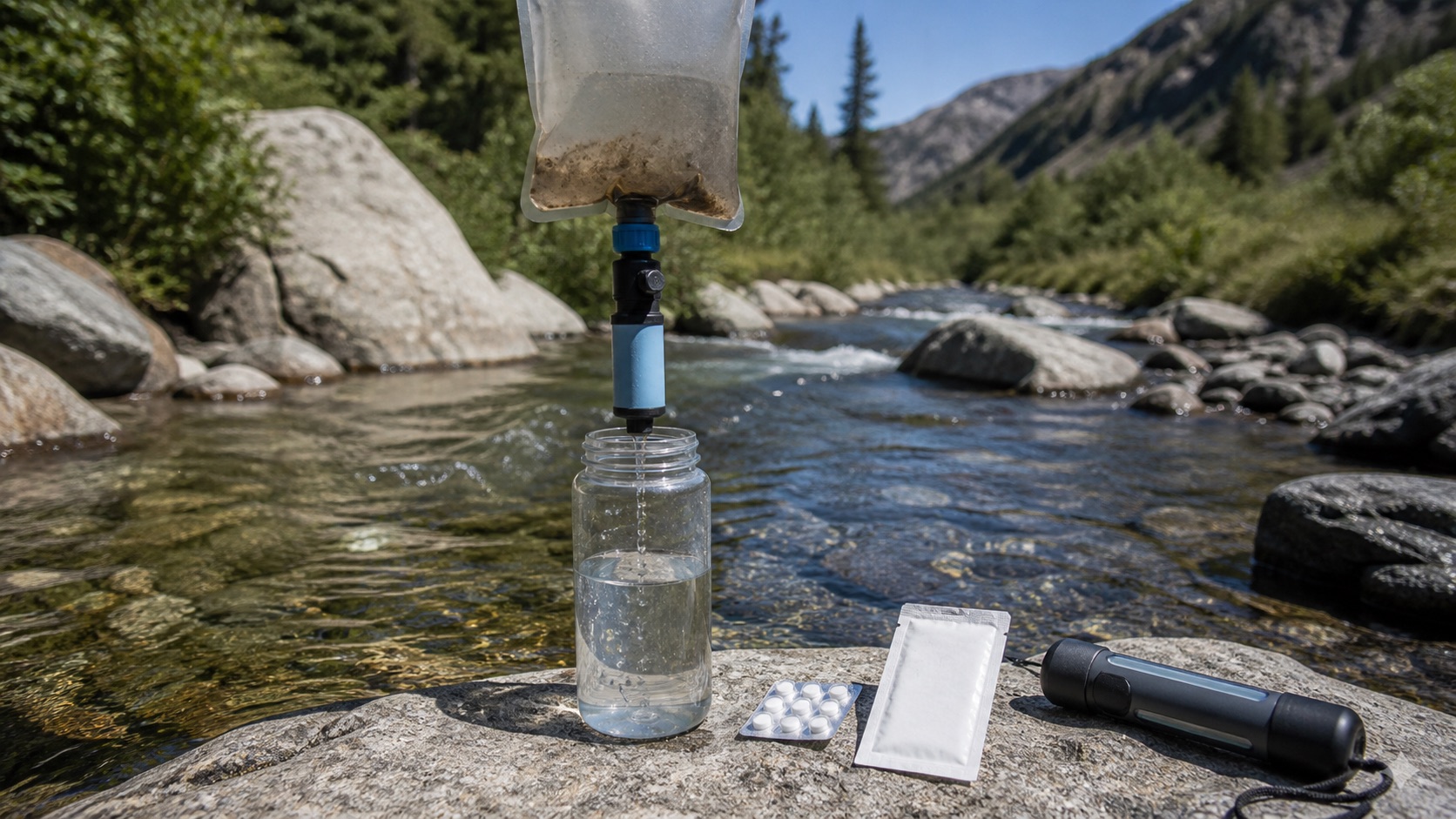
• Squeeze Filters (Sawyer Squeeze, Katadyn BeFree): Lightweight, durable, screw onto standard SmartWater bottles.
• Gravity Systems: Ideal for groups — fill a 4L reservoir, hang from a branch, and let gravity filter water effortlessly.
• UV Purifiers (SteriPEN): Destroys DNA of viruses and bacteria in 90 seconds, but requires clear water and batteries.
03.Emergency Water Boiling Protocol
Bring water to a rolling, vigorous boil for a full 60 seconds (3 minutes at elevations above 6,500 feet) to kill 100% of all biological pathogens.