Culinary Field Guide
Dehydrated & Freeze-Dried Camp Meals: Field Guide & Taste Test
In-depth review of top freeze-dried meal brands (Mountain House, Peak Refuel, Backpackers Pantry). Water volume math, rehydration times, and calorie density.
By CampfireGuides Editorial Team · Outdoor field-guide research and editingPublished
Key Field Takeaways
- 1Peak Refuel offers higher protein density (40g+ per pouch) using 100% real freeze-dried meat.
- 2Always add boiling water 0.5 oz BELOW the recommended fill line to prevent soupy pasta.
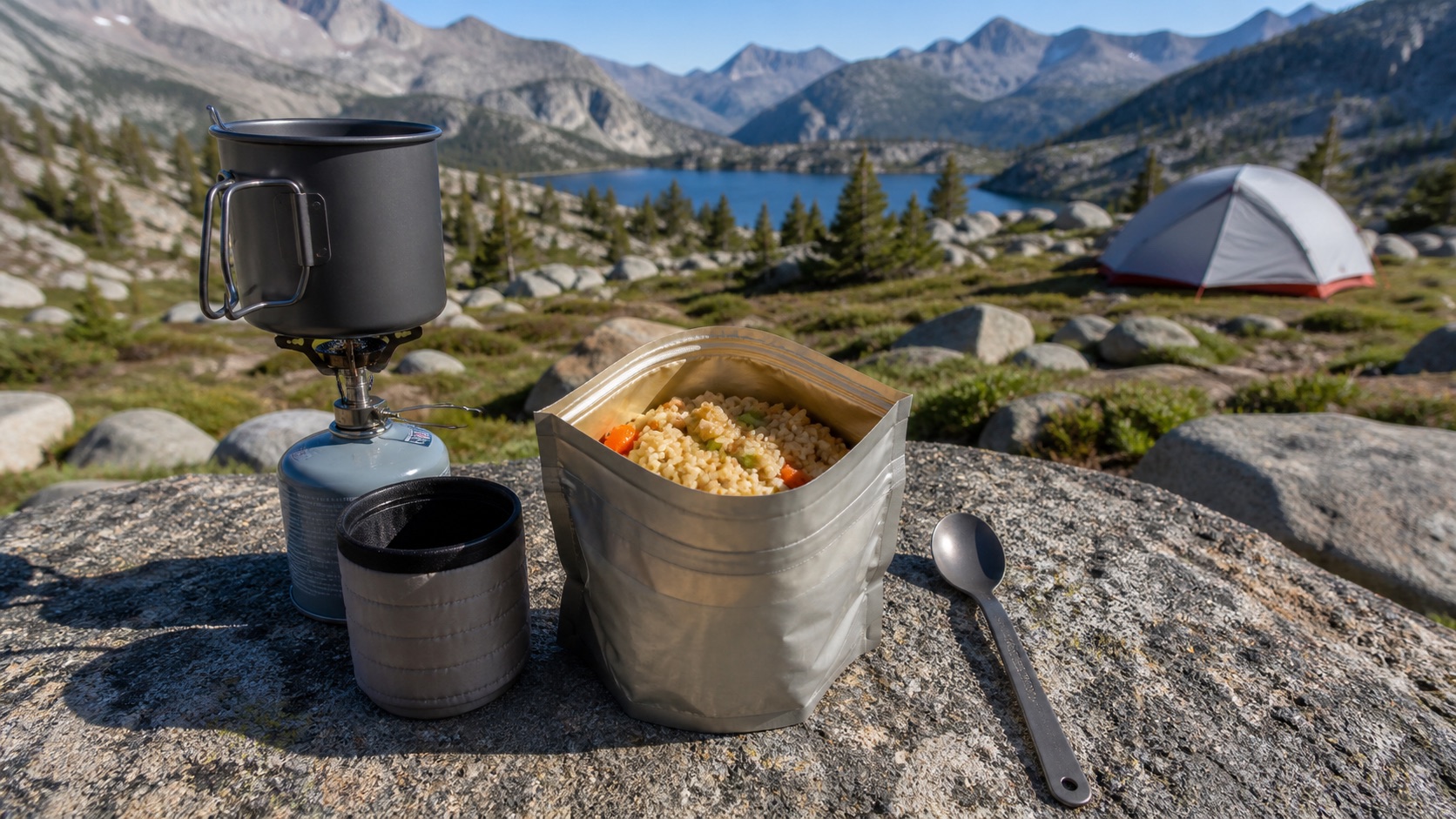
- 3Seal the pouch zip-lock tightly and let sit inside an insulated pouch cozy for 12-15 minutes at high elevation.
Social Sharing & Field Cheat Sheets
Share With Your Camp Squad
Water Purification Method Evaluator
Select a treatment method to inspect biological removal rates, flow speed, and freezing risk.
99.999%
Bacteria & Parasites
Instant (1L/min)
Treatment Speed
High Freeze Danger
Cold Weather Risk
01.Dehydrated vs Freeze-Dried: Understanding the Difference
Dehydrated food uses warm air to remove 80-95% of moisture, creating dense chewy textures (jerky, dried fruit). Freeze-drying freezes food and removes 98-99% of moisture under high vacuum, preserving original cellular structure, vibrant taste, and rehydrating in under 15 minutes.
02.Calorie Density & Sodium Management on Trail
Backpackers burn 3,500 to 5,000 calories per day. Look for meals yielding at least 120 to 140 calories per dry ounce. High sodium levels in freeze-dried meals help replenish electrolytes lost through trail sweat.
03.The Insulated Pouch Cozy Hack
In cold weather, freeze-dried pouches lose heat rapidly while steep-soaking, leaving crunchy unhydrated rice at the bottom. Slide the pouch inside a reflective Reflectix cozy or fleece beanie while rehydrating.