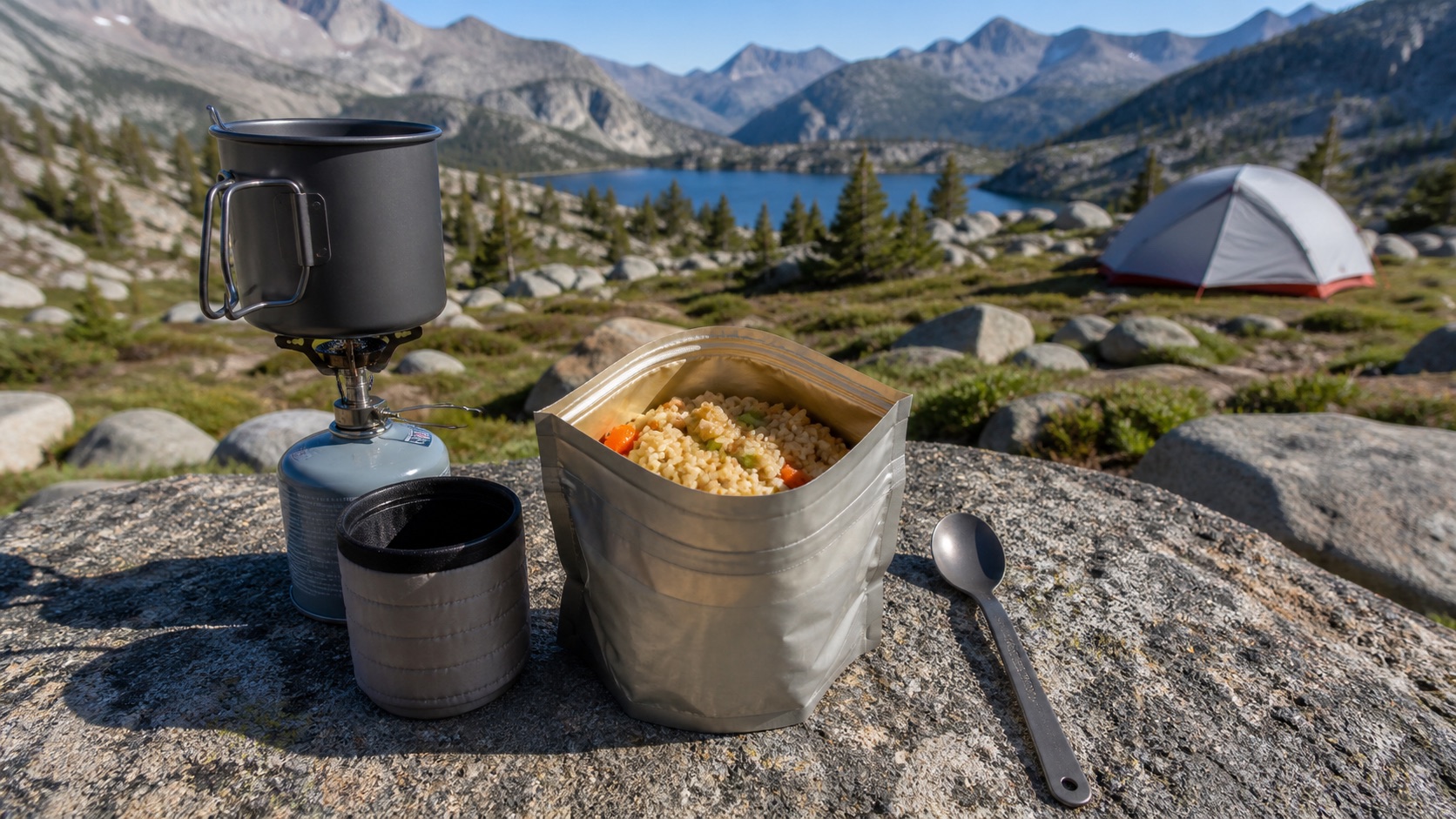
3-Day Camping Meal Plan (No Fridge or Cooler Required)
A complete 3-day breakfast, lunch, dinner, and trail snack blueprint engineered for cooler-free camping, complete with an interactive scaler, grocery checklist, and food-safety timeline.
To camp for 3 days without a fridge or cooler, sequence meals by shelf life: consume fresh, high-moisture foods (avocados, fresh eggs, crusty bread, berries) on Day 1; eat cured and semi-perishable staples (hard block cheddar, dry salami, summer sausage, cabbage, apples) on Day 2; and rely on 100% shelf-stable pantry items (retort pouches, canned beans, rolled oats, couscous, ramen, nut butters) on Day 3. Avoid raw unpreserved meats and soft cheeses.
Key Field Takeaways
1Sequence meals from highest moisture (Day 1) to semi-perishable (Day 2) to 100% shelf-stable pantry grains (Day 3).
2Hard block cheeses (aged cheddar, gouda, parmesan) and dry-cured meats (salami, summer sausage) do not require refrigeration for a 3-day trip.
3Use retort foil pouches (chicken, tuna, salmon) and single-serve condiment packets to prevent open-jar spoilage and heavy pack weight.
4Flour tortillas and dense pita pockets resist crushing and outlast sandwich loaf bread in outdoor humidity.
Quick electrolyte-replenishing pretzels with antioxidant-packed dried cranberries and cashews.
Shelf Rule: Classic high-density trail fuel.
01.The 3-Day Shelf-Life Sequencing Strategy
Camping without a cooler is not about eating boring granola bars for 72 hours—it is an exercise in chronological ingredient management. When you remove cold storage, bacterial proliferation is controlled by intrinsic food properties: moisture content (water activity), salt concentration, pH acidity, and protective skins. By sequencing meals so that the most fragile whole produce is enjoyed on evening one, cured proteins on day two, and sealed dry staples on day three, every dish tastes fresh and stays completely safe.
On your first 24 hours at camp, take advantage of hearty fresh foods that require no ice but soften quickly. Ripe avocados, thick sourdough bread, fresh farm eggs, cherry tomatoes, and sharp block cheddar make luxurious first-day meals like breakfast avocado toast and campfire loaded quesadillas. Whole cucumbers and firm citrus also thrive during this initial window.
03.Day 2: Cured Meats, Aged Hard Cheeses & Rugged Veggies
Day two shifts to semi-perishables: dry-cured Italian salamis, whole smoked summer sausages, kielbasa, firm green cabbage, carrots, baby potatoes, and crisp apples. Cabbage is the ultimate backcountry vegetable—it does not bruise or wilt like lettuce and provides crisp texture in wraps and skillets. Hard aged block cheeses (sharp cheddar, pecorino, gouda) remain resilient even in warm summer air.
By the third morning, switch to 100% shelf-stable pantry powerhouses: rolled oats with chia seeds and maple syrup, single-serve peanut butter tortilla roll-ups, retort tuna and salmon pouches with seed crackers, canned black beans and cannellini beans, quick-cooking Moroccan couscous, and sesame garlic ramen bowls. These ingredients have indefinite shelf life and are immune to heat.
05.High-Risk Foods to Avoid Without Refrigeration
Never pack raw unpreserved poultry, ground beef, fresh pork chops, or fresh seafood without ice. Avoid soft, high-moisture cheeses (fresh mozzarella, ricotta, brie, cottage cheese), cooked rice or pasta held overnight, and large opened jars of mayonnaise or dairy-based dressings. When in doubt, follow the rule: if it was sold in the refrigerated meat or dairy aisle and is soft or moist, leave it at home.
06.Packing & Campsite Storage: Keeping Food Safe in Ambient Heat
Pack your camp food in a sturdy, animal-resistant tote or dry bag stored in continuous shade—never inside a hot parked vehicle or sunny tent. Store hard cheeses and cured meats wrapped in breathable parchment or wax paper rather than airtight plastic bags to prevent moisture condensation and mold growth.