Safety Field Guide
Camping First Aid Kit Checklist: Wilderness Medical Field Guide
Comprehensive wilderness first aid kit checklist. Trauma dressings, blister treatment, campfire burn care, tick extraction, and emergency contact protocols.
By CampfireGuides Editorial Team · Outdoor field-guide research and editingPublished
Key Field Takeaways
- 1Treat hot-spot friction on heels with Moleskin immediately before a blister forms.
- 2Cool campfire spark burns with clean cold water for 10 minutes — never apply butter or grease to fresh burns.
- 3Use fine-tipped tweezers to grasp ticks by the head closest to the skin and pull straight up smoothly.
Social Sharing & Field Cheat Sheets
Share With Your Camp Squad
01.Wilderness Medicine vs Urban First Aid
In backcountry environments, professional emergency response can be hours away. A camping first aid kit must contain supplies for wound irrigation, joint stabilization, environmental exposure, and pain management.
02.Category-by-Category First Aid Checklist
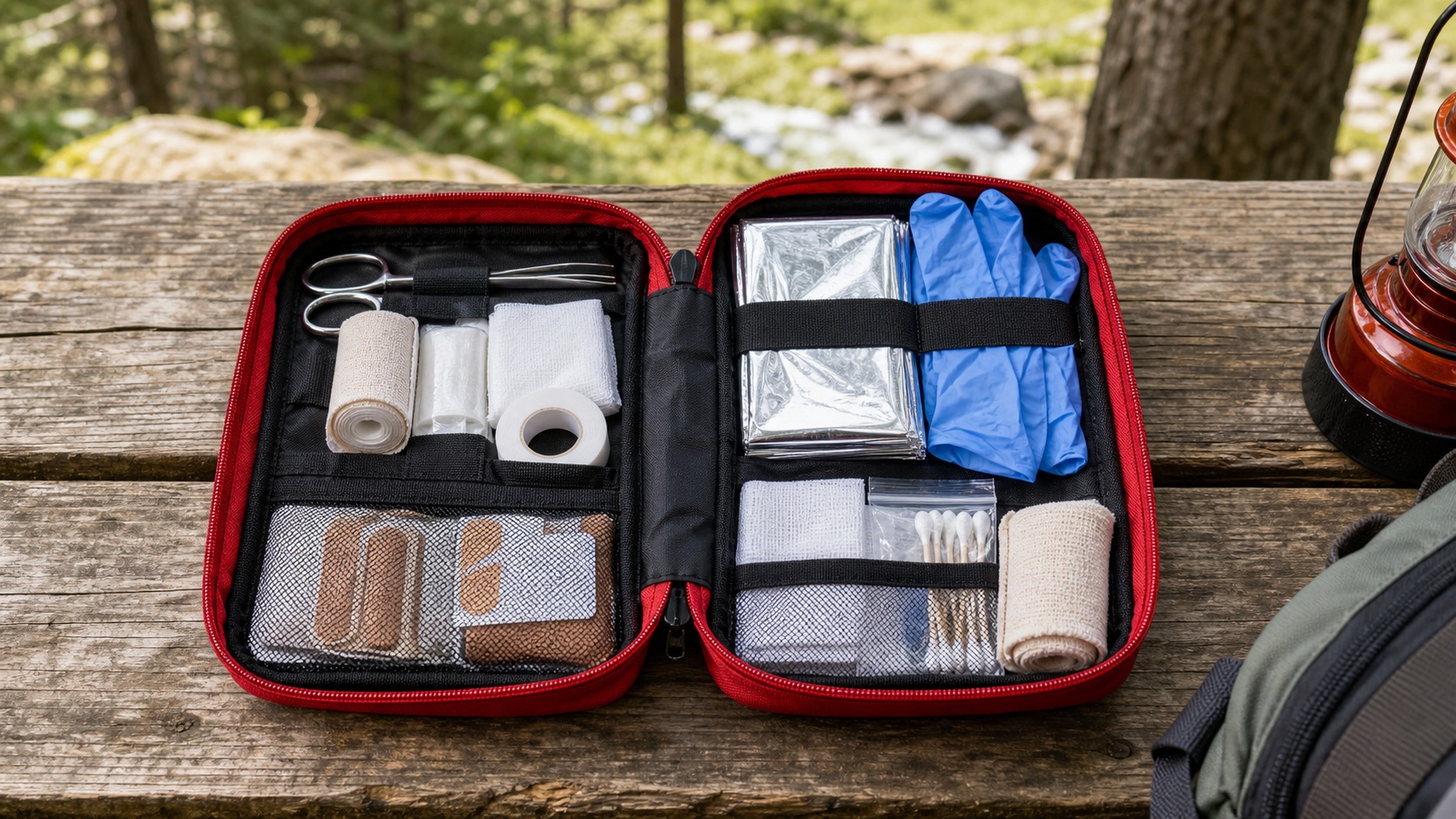
• Wound & Burn Care: Sterile gauze pads, coban self-adherent wrap, butterfly closures, Bacitracin ointment, Hydrogel burn pads, shears.
• Medications: Ibuprofen, Acetaminophen, Antihistamine (Diphenhydramine), Loperamide (anti-diarrheal), Oral rehydration salts.
• Tools & Survival: Tick key/tweezers, irrigation syringe, safety pins, nitrile gloves, CPR face shield, emergency foil thermal blanket.
03.Blister Prevention & Field Treatment
Blisters are the #1 trail injury. At the first sign of a pink "hot spot," clean the area and apply pre-cut Moleskin or Hydrocolloid bandage. If a blister pops, clean with antiseptic, apply ointment, and pad with a donut ring of Moleskin.