Culinary Field Guide
Easy Campfire Meals: 15 Simple Breakfasts, Lunches & Dinners
Easy campfire meals work best when they use one pan, a foil packet, or a cooking stick and rely on ingredients prepared at home. Choose meals with short ingredient lists, predictable cooking times, and minimal raw-meat handling at camp.
By CampfireGuides Editorial Team · Outdoor content research and field-guide editingPublished
Quick Answer
The easiest campfire meals are quesadillas, foil-packet sausage and vegetables, one-pot chili, skillet tacos, and stick-cooked hot dogs. Prep and portion ingredients at home, cook over a stable bed of coals instead of flames, and use a food thermometer whenever meat or poultry is included.
Key Field Takeaways
- 1Use glowing coals or a grate for steadier, more controllable heat than open flames.
- 2Pre-chop vegetables and pre-measure seasonings at home to reduce campsite work and waste.
- 3Cook poultry to 165°F, ground meat to 160°F, and whole cuts of beef or pork to 145°F with a 3-minute rest.
Social Sharing & Field Cheat Sheets
Share With Your Camp Squad
01.What Are 15 Easy Meals to Cook Over a Campfire?
Start with foods that tolerate uneven heat and need only one cooking vessel. These 15 ideas cover breakfast, lunch, dinner, and dessert using a skillet, pot, grate, foil, or roasting sticks. Active times are planning estimates; weather, coal temperature, ingredient size, and cookware can change them.
| # | Meal | When | Method | Active time | Best shortcut |
|---|---|---|---|---|---|
| 1 | Breakfast burritos | Breakfast | Skillet or foil | 10 minutes | Fill and wrap at home |
| 2 | Egg and potato skillet hash | Breakfast | Skillet | 20 minutes | Par-cook diced potatoes at home |
| 3 | Cinnamon apple oatmeal | Breakfast | Pot | 10 minutes | Bag oats, spices, and dried fruit together |
| 4 | Pizza quesadillas | Lunch | Skillet or grate | 8 minutes | Pack sauce in a squeeze bottle |
| 5 | Bean and cheese tostadas | Lunch | Grate or skillet | 10 minutes | Use seasoned canned beans |
| 6 | Grilled vegetable and hummus wraps | Lunch | Grate | 12 minutes | Slice vegetables at home |
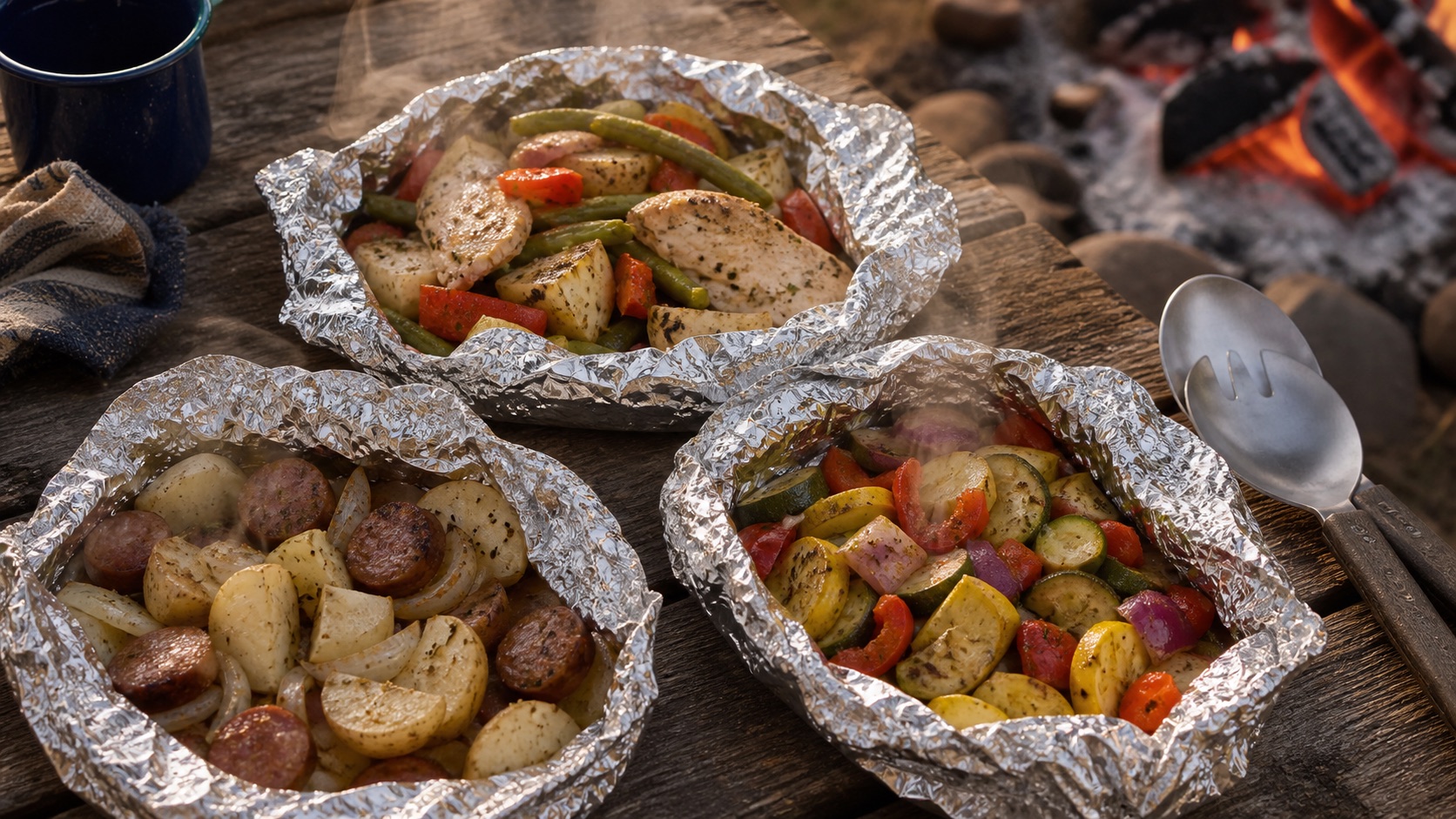
| 7 | Sausage and vegetable packets | Dinner | Foil over coals | 20–25 minutes | Slice everything at home |
| 8 | One-pot bean chili | Dinner | Dutch oven or pot | 20 minutes | Use canned beans and tomatoes |
| 9 | Campfire tacos | Dinner | Skillet | 15 minutes | Pre-mix the seasoning |
| 10 | Chicken and pepper kebabs | Dinner | Grate | 15–20 minutes | Cut and marinate at home |
| 11 | Loaded baked potatoes | Dinner | Foil beside coals | 35–45 minutes | Microwave potatoes until partly tender at home |
| 12 | One-pan sausage pasta | Dinner | Deep skillet or pot | 25 minutes | Measure pasta and seasonings together |
| 13 | Hot dogs with skillet onions | Dinner | Roasting sticks and skillet | 12 minutes | Slice onions at home |
| 14 | Banana boats | Dessert | Foil over coals | 8–10 minutes | Pack toppings together |
| 15 | Cinnamon sugar biscuit twists | Dessert | Roasting sticks | 10–15 minutes | Mix cinnamon sugar at home |
02.How Do You Build a Simple Two-Night Campfire Menu?
Use the most perishable food first. Night one can be sausage-and-vegetable foil packets; morning one, make-ahead breakfast burritos; lunch, quesadillas; night two, shelf-stable bean chili; and the final morning, oatmeal with nuts and dried fruit. Reuse tortillas, cheese, peppers, and seasonings across meals to shorten the shopping list.
03.How Do You Cook Over a Campfire Without Burning Food?
Wait until the fire has produced a broad bed of glowing coals. Move some coals beneath one side of the grate to create a hot zone and leave the other side cooler. Turn food frequently, keep a lid nearby, and move the pan instead of trying to cool an overheated fire.
04.Which Campfire Meals Need the Least Cleanup?
Foil packets, filled tortillas, hot dogs, kebabs, and pre-baked potatoes create the fewest dishes. Bring one knife, one cutting board, long tongs, and a heatproof glove. Pack out used foil and food scraps; never burn plastic-coated packaging or leave scraps in the fire ring.
05.What Food-Safety Rules Matter at Camp?
Keep perishable food at 40°F or below and do not leave it above 40°F for more than two hours—or one hour when the air temperature is above 90°F. Store raw meat below ready-to-eat food, wash or sanitize hands, and check doneness with a thermometer rather than appearance.