Culinary Field Guide
Easy Camping Breakfast Meals: 18 Quick Morning Ideas
Easy camping breakfast meals should be fast, filling, and matched to your equipment. Pack overnight oats or muffins for no-cook mornings, reheat burritos for early starts, or use one skillet for eggs, hash, pancakes, and breakfast quesadillas when you have time to cook.
By CampfireGuides Editorial Team · Outdoor content research and field-guide editingPublished
Quick Answer
The easiest camping breakfasts are overnight oats, bagels with nut butter, make-ahead burritos, one-pan egg hash, pancakes, and breakfast quesadillas. Choose no-cook food for departure mornings, prepare fillings at home, and keep eggs, cooked meat, dairy, and other perishables at 40°F or below until cooking.
Key Field Takeaways
- 1Match breakfast to the morning: no-cook for pack-up days, reheatable for early starts, and skillet meals for relaxed days.
- 2Reuse tortillas, fruit, oats, cheese, and nut butter across multiple breakfasts and snacks.
- 3Keep egg dishes and breakfast meats cold, then verify safe temperatures with a food thermometer.
Social Sharing & Field Cheat Sheets
Share With Your Camp Squad
01.What Are 18 Easy Camping Breakfast Meals?
A practical breakfast balances energy, speed, cleanup, and cooler space. These 18 options include six no-cook meals, six make-ahead or reheat meals, and six breakfasts cooked fresh at camp, making it easier to match each morning to your schedule and equipment.
| # | Breakfast | Style | Heat needed | Time at camp | Cooler needed |
|---|---|---|---|---|---|
| 1 | Bagel, nut butter and banana | No-cook | None | 3 minutes | No |
| 2 | Granola with shelf-stable milk | No-cook | None | 2 minutes | No before opening |
| 3 | Apple and hard-cheese snack plate | No-cook | None | 5 minutes | Recommended for cheese |
| 4 | Tortilla with seed butter and berries | No-cook | None | 4 minutes | Usually for berries |
| 5 | Muffins, oranges and trail mix | No-cook | None | 2 minutes | No |
| 6 | Overnight oats with fruit | No-cook | None | 2 minutes | Yes, unless using shelf-stable ingredients |
| 7 | Make-ahead breakfast burritos | Reheat | Skillet or foil | 8–10 minutes | Yes |
| 8 | Breakfast quesadillas | Reheat | Skillet | 8 minutes | Yes |
| 9 | Freezer French-toast sticks | Reheat | Skillet | 10 minutes | Yes |
| 10 | Pre-baked oatmeal squares | Reheat or cold | Optional | 5 minutes | Usually |
| 11 | Egg and vegetable muffins | Reheat or cold | Optional | 5 minutes | Yes |
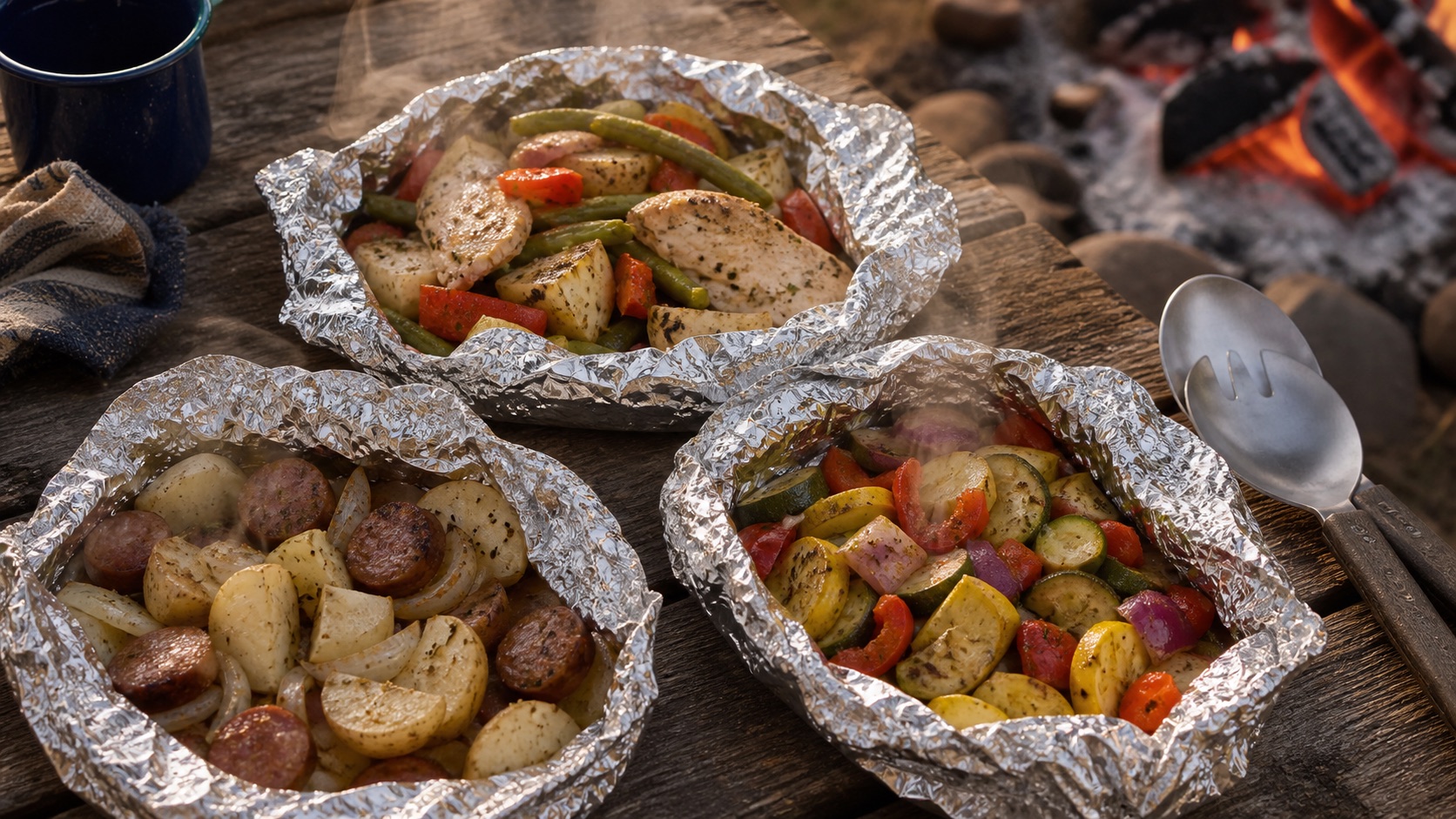
| 12 | Pre-cooked sausage and potato packets | Reheat | Foil over coals | 12–15 minutes | Yes |
| 13 | Egg and potato skillet hash | Cook fresh | Skillet | 20 minutes | Yes |
| 14 | Pancakes with berries | Cook fresh | Griddle or skillet | 15 minutes | Usually |
| 15 | Cinnamon apple oatmeal | Cook fresh | Pot | 10 minutes | No with shelf-stable toppings |
| 16 | Campfire French toast | Cook fresh | Skillet | 15 minutes | Yes |
| 17 | Bean, egg and salsa tacos | Cook fresh | Skillet | 15 minutes | Yes |
| 18 | Dutch oven breakfast casserole | Cook fresh | Dutch oven | 35–45 minutes | Yes |
02.Which Camping Breakfasts Can You Make Ahead?
Bake muffins, portion dry pancake mix, assemble burritos, cook breakfast potatoes, and mix overnight oats before leaving. Cool cooked fillings promptly before packing them in the refrigerator or cooler. Label each package by meal and day so the first breakfast is on top and the cooler stays closed longer.
03.What Can You Eat for Breakfast Without a Stove or Fire?
Choose bagels with nut butter, shelf-stable milk with granola, whole fruit, trail mix, breakfast bars, or tortillas with nut butter and banana. Overnight oats require a safe cold source when made with perishable milk. A no-cook option is valuable when fire restrictions apply or rain delays cooking.
04.How Do You Cook a One-Skillet Camping Breakfast?
Brown small diced potatoes first with a lid on, add pre-cooked vegetables or meat, then create spaces for eggs. Reduce the heat, cover, and cook until the eggs reach the desired doneness. A nonstick pan is lighter; cast iron holds steadier heat over coals. Keep a cooler side of the fire available.
05.How Do You Keep Camping Breakfast Food Safe?
Keep the cooler at 40°F or below, store raw meat beneath ready-to-eat food, and return ingredients promptly after serving. Cook egg dishes to 160°F, ground sausage to 160°F, and poultry sausage to 165°F. Reheat pre-cooked leftovers to 165°F and discard perishables left warm beyond safe limits.