Safety Field Guide
How to Keep a Tent Warm in Cold Weather: Thermal Field Guide
Master winter camping thermal techniques. The Nalgene hot water bottle trick, sleeping pad R-value stacking, condensation control, and thermal base layers.
By CampfireGuides Editorial Team · Outdoor field-guide research and editingPublished
Key Field Takeaways
- 1A compressed sleeping bag provides little insulation beneath you, so pair it with a sleeping pad chosen for the expected conditions.
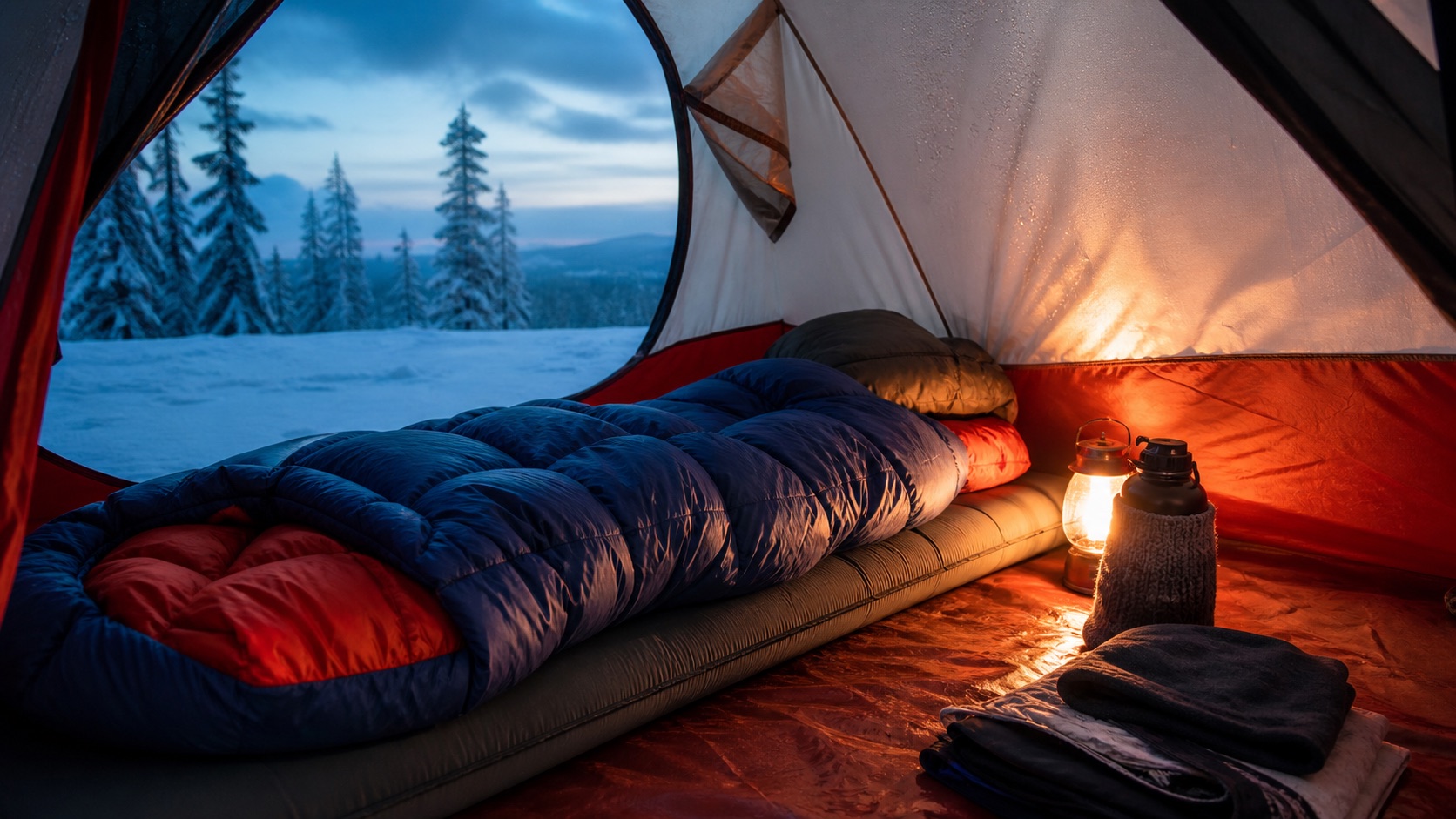
- 2Fill a rigid Nalgene bottle with boiling water, wrap in a sock, and slide it into the foot of your sleeping bag 15 minutes before bed.
- 3Vent your tent ceiling mesh slightly to allow moisture breath to escape, preventing frost condensation inside.
Social Sharing & Field Cheat Sheets
Share With Your Camp Squad
Standards-Based Sleeping Pad R-Value Planner
R-value is not an exact temperature rating. Use the dedicated guide to choose a planning range from conditions, ground surface, sleeper profile and forecast uncertainty—or add the tested R-values of pads you already own.
Open R-Value Guide & Calculator01.The Science of Sleeping Insulation: Conduction vs Convection
Sleeping bags insulate against convective air heat loss, but body weight compresses bag insulation underneath you. Without an insulated sleeping pad beneath your body, ground conduction drains body heat continuously through the night.
02.Stacking Sleeping Pads for Winter Insulation
Combine a reflective closed-cell foam pad (like Therm-a-Rest Z Lite, R-2.0) on the tent floor beneath an insulated air pad (R-4.0+). Stacking adds their R-values together, yielding an ultra-warm R-6.0+ thermal barrier.
03.The 5-Minute Pre-Bed Thermal Ritual
1. Eat a high-fat snack (peanut butter or cheese) 20 minutes before sleeping to jumpstart metabolic heat.
2. Do 20 jumping jacks outside to warm your blood (without sweating).
3. Change into 100% dry merino wool base layers and fresh dry socks.